The International Air Transport Association (IATA) has identified three priorities for the global air cargo industry as it navigates a more complex operating environment: accelerating digitalization, strengthening global standards, and enhancing safety and security.
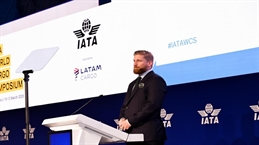
"Air cargo plays a critical role in connecting businesses to global markets and keeping supply chains moving, even as the operating environment becomes more complex. With so many external events impacting global supply chains—including the tariff and geopolitical shocks—it is important that we work on building resilience in areas we can control or influence. Working together to strengthen digitalization, global standards, and supply chain security will position air cargo well to continue supporting economic growth by connecting products to markets," said Brendan Sullivan, IATA's Global Head of Cargo, at the opening of the IATA World Cargo Symposium (WCS) in Lima, Peru.
Accelerating digitalization
IATA emphasized that digital transformation remains essential for improving efficiency and compliance across the supply chain.
"Air cargo data still sits in fragmented systems across the supply chain, creating duplication, delays, and compliance risks. This is particularly challenging for high-volume segments such as ecommerce, where house waybill data must remain aligned with airline master air waybill records across multiple systems and jurisdictions. ONE Record represents a foundational shift in how the industry shares, manages, and trusts data across the supply chain," said Sullivan.
ONE Record became the preferred standard for end‑to‑end cargo data exchange in January 2026. Airlines representing more than 70% of global air waybill volumes are on track for implementation, but IATA noted that broader adoption will require more airlines and forwarders to scale up their use of ONE Record, governments to accept ONE Record data for regulatory filings, and technology providers to deploy secure, interoperable platforms.
Strengthening global standards
IATA also called for more consistent implementation of global standards to ensure cargo can move efficiently across borders, highlighting two areas in particular. For Dangerous Goods Regulations, the number of state and operator variations has grown to more than 1,200, adding complexity in an industry built on harmonized rules; while some variation is inevitable, IATA stressed that these differences must remain transparent, justified and closely aligned with global standards.
The association also pointed to airport slots, noting that cargo carriers at major hubs such as Bogotá, Dubai, Heathrow and Gatwick often receive only temporary or ad hoc slots, limiting operational flexibility. IATA reiterated that slot allocation should follow the Worldwide Airport Slot Guidelines to ensure fair, transparent and non‑discriminatory access.
"Global standards and fair access to infrastructure are essential. As global trade evolves, aligning regulatory requirements and ensuring transparent slot allocation will be critical to maintaining reliable air cargo connectivity," said Sullivan.
IATA warned that safety and security frameworks must keep pace with evolving risks, particularly as supply chains become more digital and volumes grow. ICAO Annex 18 remains the foundation for the safe transport of dangerous goods, but modernization is needed to address issues such as undeclared dangerous goods and lithium battery misuse.
At the same time, air cargo continues to be a potential target for malicious activity, underscoring the need for consistent and modern security processes. IATA urged wider adoption of the electronic Consignment Security Declaration (e‑CSD) to improve data accuracy and reduce manual processes, along with greater alignment across pre‑loading advance cargo information programs.
"Safety and security are shared responsibilities across the entire cargo ecosystem. Modernizing global frameworks and strengthening cooperation between governments and industry will be essential to ensuring that global trade continues to move safely and securely," said Sullivan.