Two Ocean Alliance carriers are withdrawing key services between Asia and the Middle East as the conflict in Iran continues to paralyse vessel movements in the Gulf, leaving close to 150 containerships unable to exit the region.
Industry analyst Alphaliner reports that Evergreen and COSCO Shipping have each suspended one of their dedicated loops, effectively taking two of the alliance's three Asia–Middle East services offline.
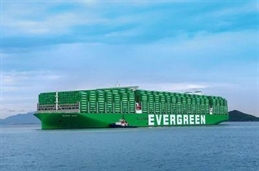
Evergreen, the sole operator of the MEA4 loop, has begun removing ships from the rotation, which previously linked Shanghai, Ningbo, Kaohsiung, Shekou, Port Kelang, Jebel Ali, Dammam and Umm Qasr.
The final sailing is scheduled to conclude on April 7, when the 9,466‑TEU Ever Laden completes its call in Ningbo. Evergreen had deployed eight similarly sized vessels on the route.
COSCO Shipping is also discontinuing the MEA5 service, which it operated independently within the alliance using seven megamax vessels. That loop connected Qingdao, Shanghai, Ningbo, Nansha, Singapore, Jebel Ali, Khalifa Port and Dammam.
According to Alphaliner, only the 19,273‑TEU COSCO Shipping Aquarius remains active, currently awaiting discharge in Sohar, Oman after diverting from its normal schedule.
The alliance's remaining Asia–Middle East loop, MEA1, continues to run but now turns back to Asia before entering the Strait of Hormuz.
CMA CGM, which operates the service, is limiting Middle East calls to Khor Fakkan in the UAE and Sohar in Oman.
With direct Gulf access constrained, carriers are increasingly shifting Asia–Middle East cargo via alternative corridors.
Several lines are routing ships around the Cape of Good Hope into the Mediterranean, using Turkish ports or Saudi Arabia's Red Sea terminals as gateways for overland connections into the Gulf. The detours reflect both the ongoing threat to shipping in the Strait of Hormuz and the persistent security risks posed by Houthi attacks in the Red Sea.