The secretary general of the International Maritime Organization (IMO), Arsenio Dominguez, has welcomed the announcement of a ceasefire between the United States, Israel and Iran, saying the pause in hostilities could open a crucial window to move seafarers and vessels out of danger after weeks of disruption in the Strait of Hormuz.
"For the health and wellbeing of seafarers and the global shipping industry, I welcome the ceasefire announced in the Middle East," he said. "I am already working with the relevant parties to implement an appropriate mechanism to ensure the safe transit of ships through the Strait of Hormuz. The priority now is to ensure an evacuation that guarantees the safety of navigation."
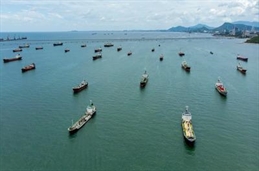
According to the IMO, around 2,000 ships—including oil and gas tankers, bulk carriers, cargo vessels and six cruise ships—have been stranded in the Gulf since the start of the conflict, with an estimated 20,000 seafarers stuck on board and unable to transit the strait.
Separately, Thomas A. Kazakos, secretary-eneral of the International Chamber of Shipping (ICS), also following the announcement of the conditional ceasefire between the United States and Iran.
"We welcome the conditional ceasefire between the United States and Iran and hope this signals a beginning of a return to stability in the region," he said. "This news will be a relief to the 20,000 seafarers who have been at the forefront of this crisis. Our thoughts remain with those civilians and seafarers who have already been injured or sadly lost their lives."
"An immediate return to freedom of navigation is now essential, and states should work with shipping to ensure orderly and unimpeded transits through the Strait. This will require coordination between industry and nation states from both inside and outside the Gulf region and ICS is willing to assist this process is any way we can," the ICS chief added.
A two‑week ceasefire was announced on April 7, following U.S.‑Israeli strikes on Iran and Iranian retaliation that had severely disrupted shipping and one of the world's most critical energy and shipping corridors.
The truce, brokered by Pakistan, is tied to the reopening of the Strait of Hormuz for commercial traffic, through which about one‑fifth of global oil and gas normally flows.
However, early implementation has been uneven with Iran reportedly asserting tight control over the waterway — and warning that ships must follow designated routes in its territorial waters and, at times, threatening to target vessels transiting without its authorization.
Western governments, on the other hand, have pushed back against any attempt to impose tolls or new conditions on passage.
Meanwhile, despite the ceasefire, analysts and operators say conditions remain highly constrained and far from a return to normal as traffic still far below normal. Before the conflict, roughly 120–150 vessels a day passed through the Strait of Hormuz and since the ceasefire, daily transits have risen only to the low double digits, with some days seeing fewer than 15 ships moving in or out.
While the ceasefire has eased immediate pressure on shipping routes, analysts note that violations have already been reported and the scope of the truce remains uncertain.